
Minding Future Taxes: Traditional IRA vs. Roth IRA
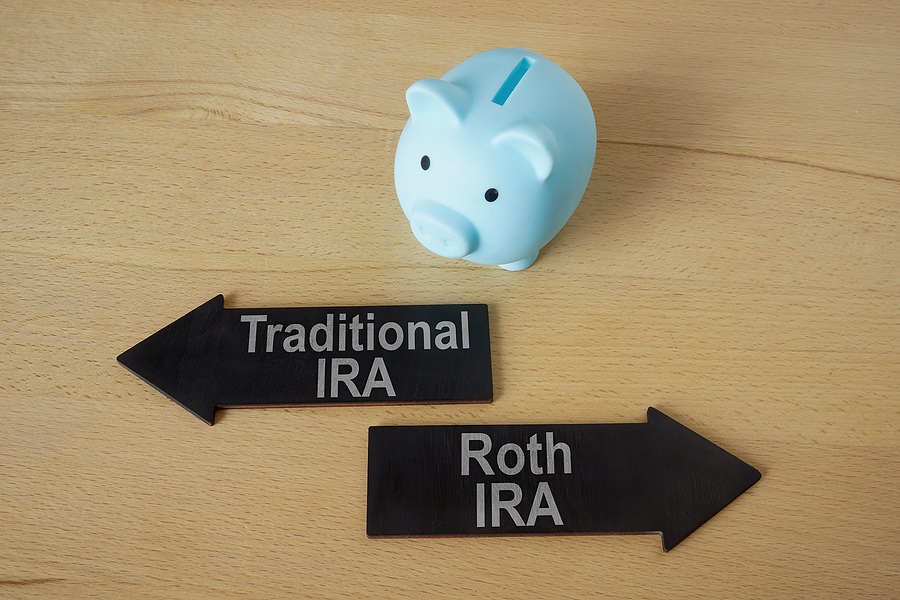
Minding Future Taxes: Traditional IRA vs. Roth IRA
When considering retirement savings options, it is paramount to understand the tax treatment of the various types of retirement accounts upon distributions. Traditional IRAs and Roth IRAs each offer unique features and have different tax implications that impact one’s retirement strategy. Here are the differences to be aware of.
Traditional IRA
A Traditional IRA is a tax-deferred retirement account, meaning contributions may be tax-deductible. Contributions may reduce one’s taxable income for the year in which they are made. Here are some of the key points regarding Traditional IRAs:
- Tax-deductible contributions— By contributing to a Traditional IRA, you will be able to deduct that amount from your income, bringing down your overall tax liability for that tax year.
- Deferred taxes on growth— Investments in a Traditional IRA grow tax-deferred, meaning taxes will not be due on dividends, interest, or capital gains until withdrawals begin.
- Taxable withdrawals—When beginning to withdraw money from a Traditional IRA, the withdrawals are treated as regular income and are therefore subject to income tax at the then-current tax rate.
Roth IRA
Roth IRAs offer tax-free growth and tax-free withdrawals in retirement. It is funded with after-tax dollars, meaning there are no tax deductions for contributions. However, this sets up the benefit of tax-free retirement income in the future. Here are things investors must know about Roth IRAs:
- Non-deductible contributions— Roth IRA contributions are made with after-tax dollars and are therefore not deductible on an income tax return.
- Tax-free growth— The investments in a Roth IRA grow tax-free, and the owner will not owe any taxes on dividends, interest, or capital gains—allowing for compound growth without tax implications.
- Tax-free withdrawals— Qualified withdrawals from a Roth IRA are tax-free as long as the account has been open for at least 5 years and the account owner is age 59½ or older.
A Comparison
Comparing the tax treatment of the Traditional IRA and Roth IRA can provide key insights into which account may be most suitable for your specific circumstances. It’s vital to consider the following:
- High tax bracket—For individuals who expect to be in a higher tax bracket in retirement, a Roth IRA may be more beneficial, as withdrawals are tax-free.
- Lower tax bracket— For those who expect to be in a lower tax bracket during retirement, the Traditional IRA—with its tax-deductible contributions—may be more advantageous.
In conclusion, the choice between a Traditional IRA and a Roth IRA largely depends on your current tax situation, future tax expectations, and goals for retirement. Therefore, consult a financial and tax professional to discuss which investment vehicle is appropriate for your unique circumstances.
Disclosure
5094620-0126c This information is for educational purposes only and is not intended to provide specific tax or legal advice. Financial planning and investing involve various risks, including the potential loss of principal. Past performance is no guarantee of future results. Please consult a tax professional before making any financial decisions. The source(s) used to prepare this material is/are believed to be true, accurate and reliable, but is/are not guaranteed.